
Sen. Rand Paul (R-KY): Voting Record, Party Loyalty Score, and Attendance · 2026 Scorecard
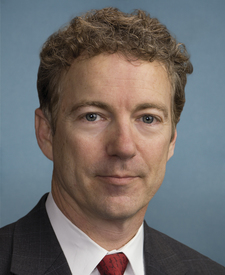
In a Senate where party-line votes have become the default, Sen. Rand Paul R-KY stands out for a simple reason: he votes no on spending bills regardless of who's asking. Over the first 14 months of the 119th Congress, Paul has cast some of the most consequential "no" votes of any member: breaking with his own party on the centerpiece of President Trump's second-term agenda, defying Republican leadership on the FY2026 budget and continuing resolution, and becoming the only Republican to support limiting Trump's military authority in Iran. This scorecard documents the data behind Paul's record.
Background: Who Is Rand Paul?
Rand Paul, an ophthalmologist from Bowling Green, Kentucky, was first elected to the U.S. Senate in 2010 and is currently serving his third term, which runs through January 2029. He is the son of former Rep. Ron Paul R-TX, the longtime libertarian congressman and presidential candidate who shaped much of his son's political philosophy.
Paul brands himself as a constitutional conservative and fiscal hawk, positions that frequently put him at odds with the mainstream of his own party. In the 119th Congress, Republican leadership made Paul Chair of the Senate Committee on Homeland Security and Governmental Affairs, a position that gives him significant oversight authority over federal agencies. He also sits on the Senate Foreign Relations Committee, the Health, Education, Labor, and Pensions (HELP) Committee, and the Small Business and Entrepreneurship Committee.
His most notable enacted legislation across his Senate career remains the FDA Modernization Act 2.0 (S. 5002, 117th Congress), which he co-sponsored and which became law, a bipartisan measure that reduced mandatory animal testing requirements for certain drug applications.
Key Votes in the 119th Congress
The following roll call votes represent Paul's most significant departures from Republican Party consensus in the 119th Congress. All vote totals are from official Senate roll call records.
Vote 1 · Senate Budget Resolution (S.Con.Res.7): Only Republican to Vote No
| Vote | Bill | Date | Result | Paul's Vote |
|---|---|---|---|---|
| Vote 87 | S.Con.Res.7: FY2025 Senate Budget Resolution | Feb. 21, 2025 | Agreed 52–48 | NAY |
In the early hours of February 21, 2025, after a marathon vote-a-rama that stretched past midnight, the Senate passed its own budget resolution along a near-party-line vote of 52–48. Paul was the only Republican to vote against it. The resolution set the blueprint for a planned reconciliation package focused on immigration enforcement and defense spending, but Paul objected to the overall deficit impact and what he characterized as insufficient spending cuts to offset new appropriations. All 48 Senate Democrats also voted no, making Paul's dissent notable for being ideologically opposite in direction: Democrats opposed the resolution's policy content; Paul opposed it for not cutting enough.
Vote 2 · One Big Beautiful Bill Act (H.R.1): One of Three Republicans Against
| Vote | Bill | Date | Result | Paul's Vote |
|---|---|---|---|---|
| Vote 372 | H.R.1: One Big Beautiful Bill Act | July 1, 2025 | Passed 51–50 (VP Vance tiebreak) | NAY |
The One Big Beautiful Bill Act, the centerpiece of President Trump's second-term domestic agenda, passed the Senate on July 1, 2025, by the narrowest possible margin: 51–50, with Vice President JD Vance casting the tie-breaking vote. Paul was one of only three Republicans to vote against it, alongside Sens. Susan Collins R-ME and Thom Tillis R-NC.
Paul's stated objections were fiscal: the bill raised the debt ceiling by $5 trillion, added trillions in new spending over the decade, and, in Paul's assessment, did not offset those costs with sufficient spending reductions. "The math doesn't really add up," Paul said on CBS News's Face the Nation in June 2025, citing the Congressional Budget Office's scoring of the bill's deficit impact. The bill was signed into law by Trump on July 4, 2025 (Pub. L. 119-21).
Vote 3 · Government Funding: FY2026 Continuing Resolution (H.R.5371), Voting With Democrats to Block It
| Vote | Bill | Date | Result | Paul's Vote |
|---|---|---|---|---|
| Vote 535 | H.R.5371: FY2026 Continuing Appropriations | Sept. 30, 2025 | Defeated 55–45 (needed 60) | NAY |
On September 30, 2025, a continuing resolution to keep the federal government funded for FY2026 failed in the Senate, falling short of the 60-vote threshold required for passage under reconciliation rules. The bill received 55 votes in favor, five short of the required 60. Paul cast the lone Republican "no" vote, making the final tally 55 Yea (most Republicans plus Sen. John Fetterman D-PA, Sen. Catherine Cortez Masto D-NV, and Sen. Angus King I-ME) to 45 Nay (most Democrats, Sen. Bernie Sanders I-VT, and Paul). Democrats' objections were policy-driven; Paul's was fiscal: he opposed the spending levels as too high. Paul's vote on the CR contributed to the government funding dispute that dominated the fall of 2025.
Vote 4 · Iran War Powers Resolution (S.J.Res.59): The Only Republican Yes
| Vote | Bill | Date | Result | Paul's Vote |
|---|---|---|---|---|
| 2nd Sess. Vote 46 | S.J.Res.104: Iran War Powers Resolution | March 4, 2026 | Rejected 47–53 | YEA |
When Sen. Tim Kaine D-VA and Paul jointly introduced a War Powers Resolution to require congressional authorization for U.S. military operations in Iran, it was the starkest demonstration of Paul's political independence. On March 4, 2026, the Senate voted on a motion to discharge S.J.Res.104 from committee and bring it to the floor, a procedural step necessary to force a direct vote on the resolution. Paul voted in favor of the motion (Yea), making him the only Republican in the Senate to do so. The motion was rejected 47–53, allowing the Trump administration to continue operations in Iran without a direct congressional authorization vote. In a subsequent opinion column, Paul excoriated his colleagues for what he called a failure to exercise Congress's constitutional war powers authority.
"Congress should be ashamed. We sent our military to war without a single vote, without a single debate, and without asking the American people."
Sen. Rand Paul (R-KY), op-ed published March 5, 2026
Attendance and Missed Votes
According to GovTrack data covering Paul's full Senate career from January 2011 through March 2026, Paul has missed 274 of 5,305 roll call votes, a lifetime missed vote rate of approximately 5.2%. The median missed vote rate among senators currently serving is 2.8%, making Paul's absence record notably worse than his peers. Paul's higher miss rate is partly attributable to his 2015 and 2016 presidential campaign, during which he missed a significant number of Senate votes, as well as medical absences and other factors GovTrack does not independently track.
Party Loyalty Assessment
Across the 119th Congress through mid-March 2026, Paul has cast approximately 84% of his votes in alignment with Republican Party positions on major roll calls, a figure below the typical 90–95% loyalty rate of most Senate Republicans. His defections are consistent and predictable: he breaks with his party on fiscal matters when he believes a bill increases the deficit without adequate offsets, and on foreign policy when he believes military action lacks congressional authorization.
What distinguishes Paul's dissent from that of other Republican moderates like Collins or Murkowski is ideological consistency. Collins and Murkowski frequently break from the party in the direction of more government spending or more deference to Democratic positions; Paul almost exclusively breaks in the direction of less spending and stronger constraints on executive war powers. On nominations and social policy, Paul's record in the 119th Congress has largely tracked with his Republican colleagues.
It is also worth noting that Paul's defections have sometimes had outsized practical impact. His vote against the Senate budget resolution in February 2025 made him the lone Republican holdout, attracting significant media attention and briefly complicating Senate Majority Leader John Thune's legislative calendar. His opposition to the One Big Beautiful Bill, while ultimately unable to sink the legislation, created pressure that forced vote-a-rama negotiations to extend past midnight on July 1.
Committee Assignments
In the 119th Congress, Paul chairs the Senate Committee on Homeland Security and Governmental Affairs, a position that gives him direct oversight authority over the Department of Homeland Security, federal emergency management, and government efficiency initiatives. He also sits on the Senate Foreign Relations Committee (relevant to his consistent war powers work), the HELP Committee, and the Small Business and Entrepreneurship Committee.
Legislative Record
Paul has been the primary sponsor of one enacted bill across his full Senate tenure: the FDA Modernization Act 2.0 (S. 5002, 117th Congress), which modernized federal requirements around mandatory animal testing for pharmaceutical drug applications. The bipartisan measure was signed into law in December 2022. GovTrack notes that very few bills introduced by any legislator are ultimately enacted, and that other legislative activities (committee oversight, amendments, and constituent services) are significant but harder to quantify.
Primary Sources
- Senate Roll Call Vote 87: S.Con.Res.7 Budget Resolution, Feb. 21, 2025 (senate.gov)
- Senate Roll Call Vote 372: H.R.1 One Big Beautiful Bill Act, Final Passage, July 1, 2025 (senate.gov)
- Senate Roll Call Vote 535: H.R.5371 FY2026 Continuing Resolution, Sept. 30, 2025 (senate.gov)
- Senate Roll Call Vote 46 (2nd Session): S.J.Res.59 Iran War Powers Resolution, March 4, 2026 (senate.gov)
- H.R.1: One Big Beautiful Bill Act, 119th Congress (congress.gov)
- S.J.Res.104: Iran War Powers Resolution, 119th Congress (congress.gov)
- S.5002: FDA Modernization Act 2.0, 117th Congress (congress.gov)
- Sen. Rand Paul: GovTrack.us member profile, voting statistics, and committee assignments