
Rep. Kevin Kiley Legislator Scorecard: The House's Only Independent
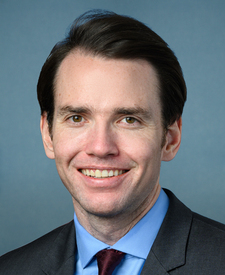
As of early 2026, Kevin Kiley is the only Independent member of the United States House of Representatives. That is not a honorary distinction or a political posture: it is a verified data point in the Congress.gov member registry, where his party affiliation changed from "R" (Republican) to "I" (Independent) and was confirmed as updated on March 20, 2026.
In a chamber where every procedural vote, every committee assignment, and every floor strategy runs through the two-party machine, being the sole Independent is either a principled stand or an interesting technicality. What the voting data actually shows is more nuanced than either interpretation.
Who Is Kevin Kiley?
Rep. Kevin Kiley represents California's 3rd Congressional District, a Northern California seat covering Auburn, Roseville, and the Sacramento-area suburbs. He was born in 1985, making him 40 years old. He first won the seat in 2022 and was reelected to the 119th Congress in 2024. Before Congress, he served in the California State Assembly, where he established himself as a fiscal conservative and critic of Sacramento's progressive governance.
His Washington office is at 2445 Rayburn House Office Building, the institutional center of House business, not a fringe assignment. His district is historically competitive, a suburban Northern California seat that has swung between parties in recent cycles.
The switch from Republican to Independent happened in 2026. The Congress.gov API now lists his partyAbbreviation as "I", confirmed as of March 20, 2026. The official public record does not document the specific reasons for the switch, and this article will not speculate on them. What is documented are his votes and his legislative record.
The Party Switch: What the Record Shows
Kiley is not just an Independent in label: he is the only Independent in a chamber of 435 members. In the House's partisan world, that means he caucuses with no automatic group, holds no standing in either party's conference meetings, and faces every floor vote as a one-member bloc.
What makes this scorecard interesting is the immediate question it raises: does his voting record actually reflect independence? Roll Call Vote #101, conducted on March 25, 2026 on H.R. 5103, the Make the District of Columbia Safe and Beautiful Act, provides the most recent data point.
The roll call breakdown by party: 212 Republicans voted YEA, 0 voted NAY, 5 were Not Voting. 5 Democrats voted YEA, 206 Democrats voted NAY, 3 were Not Voting. Kiley, listed in the House Clerk's XML as party "I", voted YEA.
On this vote, the only Independent in the House sided with the Republican majority. The available floor vote data does not show a prior roll call where Kiley broke from the Republican position since his party reclassification. That limitation should be noted: a single floor vote does not a pattern make, and the full scope of his crossover votes will require more roll calls to assess.
His Legislative Agenda
The fuller picture of Kiley's legislative identity emerges from his bill sponsorship record: 41 bills introduced in the 119th Congress (per Congress.gov API), with 268 bills cosponsored. No bills he sponsored as primary author have been enacted into law as of this writing, which is not unusual: most House legislation dies in committee.
His most advanced piece of sponsored legislation is H.R. 3495, the Direct Seller and Real Estate Agent Harmonization Act, introduced May 19, 2025. As of February 2026, the bill had been placed on the Union Calendar (Calendar No. 420), received a CBO cost estimate, and a committee report (H. Rept. 119-494), putting it closer to a floor vote than any other Kiley-sponsored bill. It has 31 cosponsors.
His other sponsored legislation reveals a range that spans conventional conservative territory and some more independent-minded priorities:
| Bill | Title | Policy Area | Status |
|---|---|---|---|
| H.R. 3495 | Direct Seller and Real Estate Agent Harmonization Act | Labor / Employment | Union Calendar · nearest to floor |
| H.R. 7619 | Keep Jobs in California Act of 2026 | Taxation | Referred to Judiciary Committee |
| H.R. 7255 | Santini-Burton Modernization Act of 2026 | Public Lands / Natural Resources | Referred to Natural Resources Committee |
| H.R. 7139 | Housing Choice Voucher Fairness Act of 2025 | Housing | Referred to Financial Services Committee |
| H.R. 6402 | SAFE AI Research Grants Act | Science / Technology | Referred to Science, Space & Technology |
| H.R. 4889 | Anti-Gerrymandering bill (redistricting limits) | Government Operations / Politics | Referred to Judiciary Committee |
| H.R. 4232 | No Tax Dollars for Riots | Crime / Law Enforcement | Referred to Ways and Means + Oversight |
A few items stand out. The SAFE AI Research Grants Act (H.R. 6402), focused on ethical AI development, is unusual for a legislator who previously caucused with House Republicans, where AI governance legislation has generally been viewed with skepticism. The anti-gerrymandering bill (H.R. 4889) similarly cuts against traditional partisan self-interest, proposing to limit states to one redistricting cycle per census. And the housing voucher bill reflects California-specific priorities that don't fit neatly on a standard left-right axis.
His cosponsorships show even broader range. Among the 268 bills he cosponsored in the 119th Congress, the record includes the Mono Lake Kootzaduka'a Tribe Recognition Act (H.R. 5820), a Sikh American anti-discrimination bill (H.R. 7100), a Truth and Healing Commission on Indian Boarding School Policies Act, and education legislation that passed committee 33-0 (H.R. 7890, Science of Reading Act) and 30-3 (H.R. 7892, No Aid for Ghost Students Act) in March 2026.
The Scorecard
What does Kevin Kiley's record look like in full? Here is the data as documented in official public records through March 26, 2026:
| Metric | Data | Source |
|---|---|---|
| Party affiliation | Independent (switched from R in 2026) | Congress.gov API |
| District | California's 3rd Congressional District | Congress.gov API |
| Sole Independent in House? | Yes · only member with party "I" | Congress.gov API |
| Bills sponsored (119th) | 41 | Congress.gov API |
| Bills cosponsored (119th) | 268 | Congress.gov API |
| Bills enacted as primary sponsor | 0 confirmed | Congress.gov API |
| Most advanced sponsored bill | H.R. 3495 · Union Calendar (Calendar No. 420) | Congress.gov |
| Most recent floor vote (Roll #101) | YEA · H.R. 5103 (DC Safe and Beautiful Act) | House Clerk Roll Call #101 |
| Voted with Republican majority on Roll #101? | Yes | House Clerk Roll Call #101 |
What Independence Actually Looks Like
"Independent" means different things depending on what you measure. On the floor of the House, Kiley's available roll call data shows votes aligned with the Republican majority: his floor voting pattern post-switch is consistent with his pre-switch record. He is not voting like a Democrat. He is not even consistently voting in a way that breaks from the majority bloc he used to formally belong to.
But zooming out to his legislative sponsorship and cosponsorship record tells a more complex story. He is sponsoring AI governance legislation. He is cosponsoring tribal recognition bills and civil rights legislation for Sikh Americans. He is pushing anti-gerrymandering reform. He is actively working on housing access in California. None of these are standard-issue Republican caucus priorities in the 119th Congress.
The honest read is this: on partisan floor votes in a slim-majority House, Kiley appears to vote with the Republican bloc. In committee and at the bill introduction stage, his agenda is meaningfully broader. Whether the floor voting pattern will shift now that he is officially free of the Republican conference, or whether the party label change is more symbolic than substantive, will only become clear with more votes on the record.
For now, Kevin Kiley is a data point of one. In a chamber designed around two parties, that is a genuinely unusual position to occupy.
Primary Sources
- Congress.gov: Rep. Kevin Kiley Member Profile (Bioguide K000401)
- Congress.gov: Kiley Sponsored Legislation (119th Congress, 41 bills)
- Congress.gov: Kiley Cosponsored Legislation (119th Congress, 268 bills)
- House Clerk: Roll Call Vote #101 (March 25, 2026) · H.R. 5103
- House Clerk: 2026 Roll Call Vote Index
- Congress.gov: H.R. 5103, Make the District of Columbia Safe and Beautiful Act
- Congress.gov: H.R. 3495, Direct Seller and Real Estate Agent Harmonization Act
- Congress.gov: H.R. 7619, Keep Jobs in California Act of 2026
- Congress.gov: H.R. 6402, SAFE AI Research Grants Act
- Congress.gov: H.R. 7892, No Aid for Ghost Students Act of 2026
- Congress.gov: H.R. 7890, Science of Reading Act of 2026