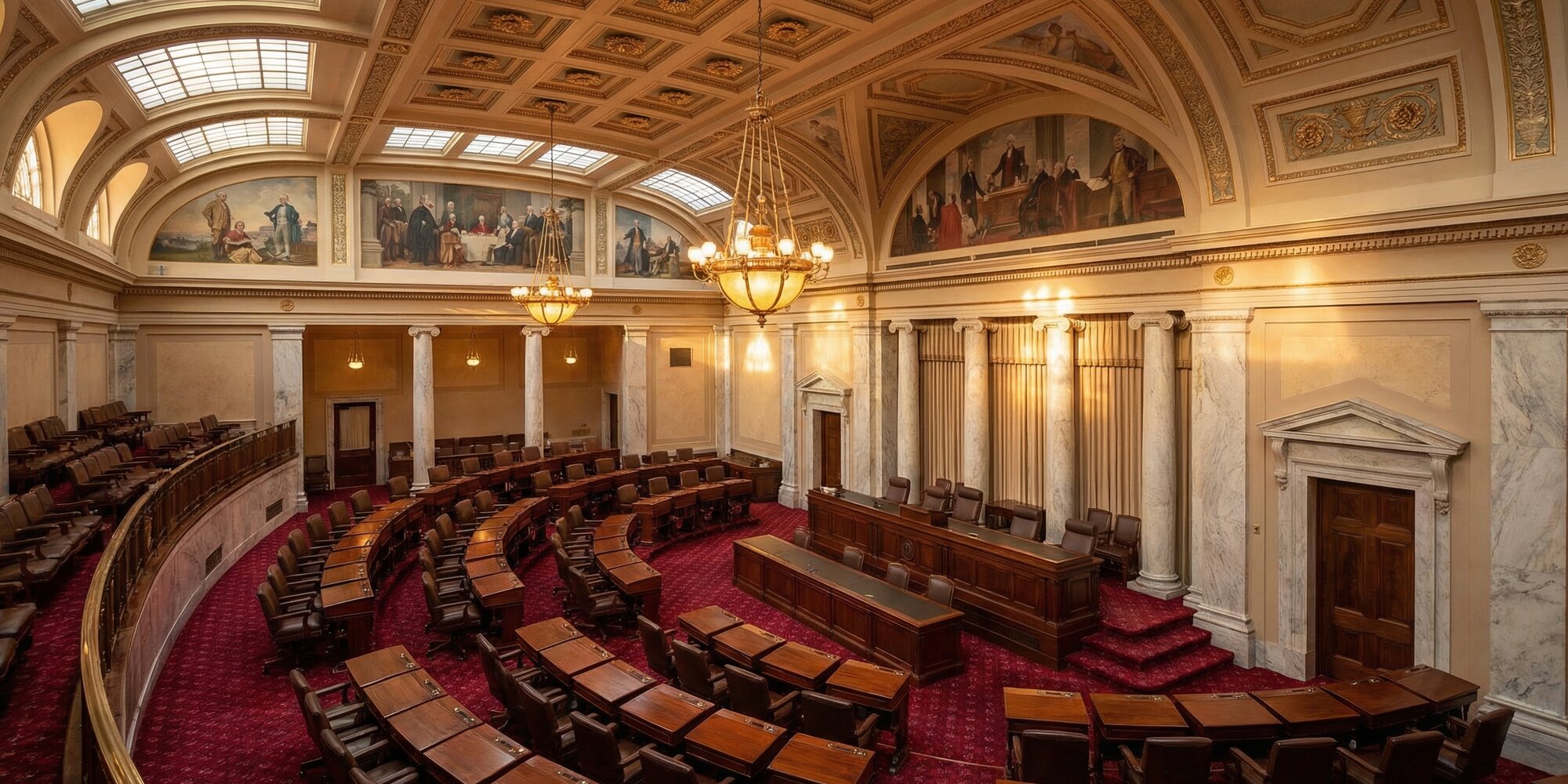
The Senate is voting today on whether to require congressional authorization before the United States continues military operations against Iran. The resolution — S.J.Res.104 — was introduced by Sens. Tim Kaine (D-VA) and Adam Schiff (D-CA) and backed by Minority Leader Chuck Schumer (D-NY), with Republican Sen. Rand Paul (R-KY) offering bipartisan support. If it passes the Senate, a companion measure is expected to come before the House on Thursday.
What the Resolution Does — in Plain English
S.J.Res.104 invokes the War Powers Resolution of 1973, a federal law that limits the president's ability to commit U.S. armed forces to extended combat without congressional authorization. The text directs the administration to remove U.S. armed forces from "hostilities within or against the Islamic Republic of Iran that have not been authorized by Congress."
In practice, that means the resolution would require President Trump to end or suspend U.S. participation in the ongoing air campaign against Iran — unless and until Congress separately votes to authorize it. The resolution explicitly preserves the right of U.S. forces to act in self-defense. It does not declare any position on the underlying policy merits of the conflict.
The House companion measure, H.Con.Res.38, introduced by Rep. Ro Khanna (D-CA) and Rep. Thomas Massie (R-KY), is substantively similar and invokes the same legal authority under section 5(c) of the War Powers Resolution Act.
Background: The Iran Conflict and Its Congressional History
The U.S.-Israel joint military operation against Iran began in late February 2026. The administration characterized the strikes as limited defensive operations aimed at Iran's nuclear infrastructure and missile program. As of March 4, the military campaign had expanded beyond initial projections, with President Trump indicating it would last an estimated four to five weeks — and potentially longer.
This is not the first war powers challenge in the 119th Congress. Legislators have voted on seven war powers resolutions since June 2025 — related to Iran, Venezuela, and other theaters — and all have failed. A similar Iran war powers resolution introduced by Kaine in June 2025 earned most Democratic votes plus Sen. Paul's support, but fell short of the 50 needed to advance.
Key Sponsors and Their Arguments
Sen. Tim Kaine (D-VA) — the lead Senate sponsor — frames the resolution in constitutional terms: "We shouldn't be at war without a debate and vote. That was what the framers intended." Kaine argues that putting service members in harm's way without a formal congressional authorization undermines accountability and troop safety.
"If you don't have the guts to vote yes or no on a war vote, how dare you send our sons and daughters into war where they risk their lives."
Sen. Tim Kaine D-VA — lead sponsor of S.J.Res.104Sen. Rand Paul (R-KY) is the lone Republican Senate co-sponsor, maintaining his longstanding libertarian-aligned opposition to unauthorized executive military action. On the opposing side, Senate Majority Leader John Thune (R-SD) argues that Trump "has the authority that he needs to conduct the activities" and is "acting in the best interest of the nation."
The Vote Math
The resolution needs 50 votes to advance in the Senate. Republicans hold 53 seats; Democrats hold 47. To pass, the resolution would need every Democrat plus at least four Republicans beyond Paul.
| Senator | Party / State | Position | Notes |
|---|---|---|---|
| Tim Kaine | D-VA | YES | Lead sponsor |
| Rand Paul | R-KY | YES | Only Republican co-sponsor |
| John Fetterman | D-PA | NO | Breaking with Democratic caucus |
| Todd Young | R-IN | NO | Cited Iran "core threat" rationale |
| John Thune | R-SD | NO | Majority Leader, strongly opposed |
With Fetterman defecting, the resolution would need at least five Republicans to succeed. As of Wednesday afternoon, only Paul had publicly committed to yes. Even if the resolution clears both chambers, President Trump could veto it. An override would require two-thirds majorities in each chamber — a threshold current vote counts suggest is unattainable.
Why Sponsors Say It Still Matters
Advocates for the resolution, including Kaine and Sen. Chris Murphy (D-CT), concede it is unlikely to become law. The stated purpose is to force lawmakers to take a public, on-the-record position on whether the Iran conflict has legitimate authorization. With November 2026 midterms on the horizon, the Reuters/Ipsos poll showing broad unpopularity makes every senator's vote politically significant.
The Senate roll call vote was scheduled for 4:00 PM ET on March 4, 2026. Results are posted to Senate.gov roll call votes. The House companion resolution, H.Con.Res.38, was expected Thursday.
Primary Sources
- S.J.Res.104 Full Text — Congress.gov (119th Congress)
- H.Con.Res.38 Summary — Congress.gov (119th Congress)
- Senate Roll Call Votes — Senate.gov
- Reuters: U.S. Lawmakers Set to Vote on War Powers (March 4, 2026)
- Reuters/Ipsos Poll: Just One in Four Americans Support U.S. Strikes on Iran
- CBS News: Senate to Vote on Reining in Trump's War Powers Amid Iran Campaign
- The Guardian: Senate to Vote on War Powers Resolution (March 4, 2026)

