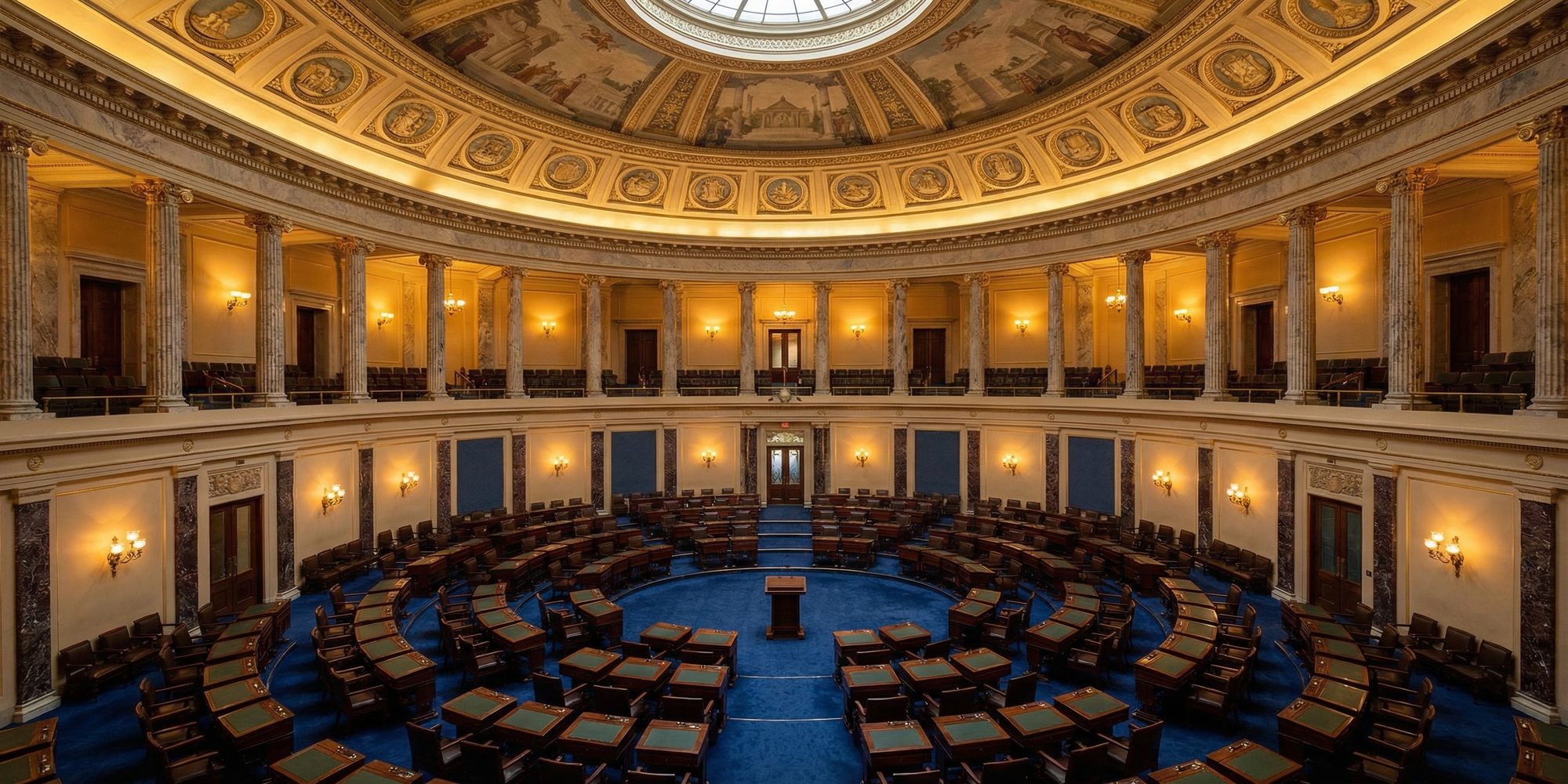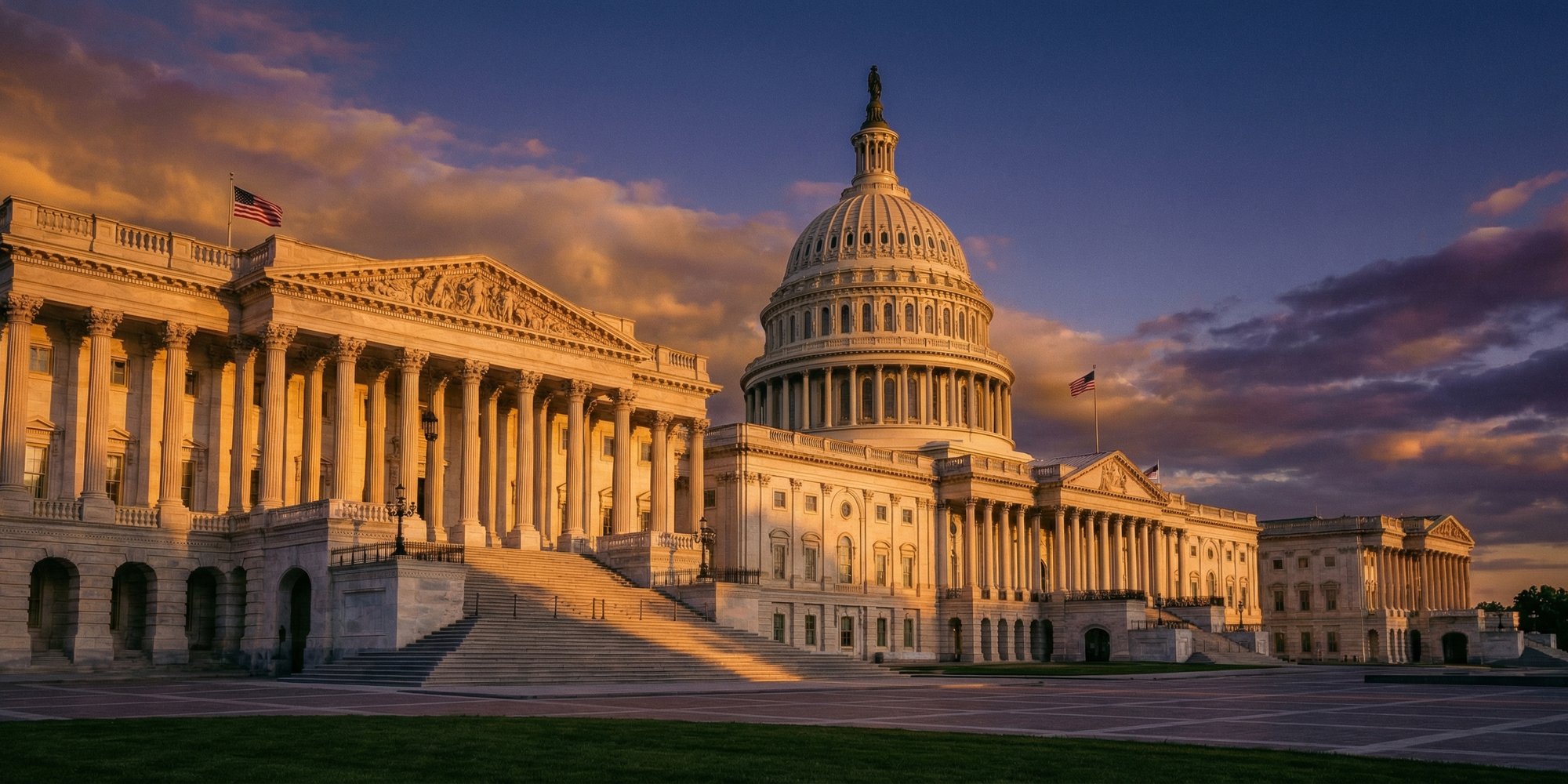
Every roll call vote in Congress is a recorded decision — a yes, a no, or a conspicuous absence. When lawmakers miss votes, their constituents lose a voice on the floor. Most members miss around 3% of votes over the course of their careers, according to GovTrack's long-run tracking data. But in the 119th Congress, some members have spent months missing the vast majority of floor votes — stretching the definition of "showing up" to its limit.
This is the Empty Seat Report: a data-driven look at who has been most absent from the floor of the House and Senate during the current Congress, based on GovTrack's Missing Members tracker and GovTrack's 2024 Report Cards.
House: The Most Absent Representatives
In the House, Rep. Eric Swalwell (D-CA14) logged the most striking prolonged absence of the 119th Congress so far. Between September 19, 2025 and January 21, 2026 — a stretch covering roughly four months — Swalwell missed 97 of 119 roll call votes, an 82% absence rate, according to GovTrack. He returned to voting in late January, but has since missed an additional 8 of 40 votes (20%) through early March 2026. GovTrack notes that over his full career, Swalwell has missed 8.5% of all roll call votes — well above the 2.1% median for currently serving representatives.
Rep. Greg Casar (D-TX35) also logged an extended absence during a similar window. Between November 17, 2025 and January 21, 2026, Casar missed 80 of 115 roll call votes (70%), according to GovTrack. Since returning in late January, he has been present for approximately 80% of votes through early March.
The most medically significant absence in the current Congress belongs to Rep. Gregory Murphy (R-NC3). Between December 15, 2025 and February 24, 2026, Murphy missed 76 of 99 roll call votes (77%), according to GovTrack's tracker, which noted he may have been out for cancer treatment. Murphy returned to the floor in late February and has not missed a vote since his return — 0 of 16 roll call votes missed as of early March 2026. His 2024 absence rate (during the 118th Congress) was already elevated at 13.4%, ranking him #19 in the House for missed votes that year.
| Member | Party/State | Peak Absence Period | Votes Missed | % Missed | Context |
|---|---|---|---|---|---|
| Rep. Eric Swalwell | D-CA14 | Sept. 19, 2025 – Jan. 21, 2026 | 97 of 119 | 82% | Reason not disclosed |
| Rep. Gregory Murphy | R-NC3 | Dec. 15, 2025 – Feb. 24, 2026 | 76 of 99 | 77% | Possible cancer treatment; has since returned |
| Rep. Greg Casar | D-TX35 | Nov. 17, 2025 – Jan. 21, 2026 | 80 of 115 | 70% | Reason not disclosed; has since returned |
Source: GovTrack Missing Members Tracker. Data current as of early March 2026.
Chronic Patterns: Elevated Rates Across Recent Congresses
Some members have consistently missed more votes than their peers across multiple congressional sessions. GovTrack's 2024 House report card — covering the 118th Congress — identified several still-serving 119th Congress members who carried elevated absence rates into the current term:
| Member (119th Congress) | Party/State | 2024 (118th) Missed Rate | 2024 Rank (most absent) |
|---|---|---|---|
| Rep. Emanuel Cleaver | D-MO5 | 17.3% | #13 |
| Rep. Wesley Hunt | R-TX38 | 16.4% | #15 |
| Rep. Anna Paulina Luna | R-FL13 | 16.0% | #16 |
| Rep. Frederica Wilson | D-FL24 | 13.2% | #20 |
| Rep. Gregory Murphy | R-NC3 | 13.4% | #19 |
| Rep. Dan Crenshaw | R-TX2 | 11.0% | #26 |
| Rep. Eric Swalwell | D-CA14 | 10.7% | #29 |
Source: GovTrack 2024 House Report Card — Missed Votes. 118th Congress data, as of February 2025.
Senate: Rand Paul's February Gap
On the Senate side, Sen. Rand Paul (R-KY) logged the most notable recent absence in the upper chamber. Between February 12 and March 2, 2026, Paul missed 7 of 8 roll call votes (88%), according to GovTrack. He last voted on February 12 before returning to cast votes on March 5. GovTrack does not track reasons for individual missed votes. Over his full Senate career (January 2011 through March 2026), Paul has missed 274 of 5,298 roll call votes — a 5.2% lifetime rate, which GovTrack notes is "much worse than the median of 2.8%" among currently serving senators.
For context, the 2024 Senate report card from GovTrack — covering the 118th Congress — showed that Sen. Paul's 118th Congress absence rate was 4.1%, ranking him #43 among the most absent senators that year. The top absentees in 2024 were largely explained by campaigns and confirmations: Sen. Adam Schiff (D-CA) was absent 47.8% of the time while running for Senate, and JD Vance missed 22.1% while serving as vice-presidential candidate.
| Senator | Party/State | 2024 (118th) Missed Rate | Known Reason |
|---|---|---|---|
| Sen. Adam Schiff | D-CA | 47.8% | Running for Senate |
| Sen. JD Vance | R-OH | 22.1% | Vice-presidential campaign |
| Sen. Tim Scott | R-SC | 21.6% | Presidential campaign (2023 into 2024) |
| Sen. John Fetterman | D-PA | 21.2% | Medical treatment (depression) |
| Sen. John Barrasso | R-WY | 16.8% | Not publicly disclosed |
| Sen. Bill Hagerty | R-TN | 12.5% | Not publicly disclosed |
| Sen. Rand Paul | R-KY | 4.1% | Not publicly disclosed |
Source: GovTrack 2024 Senate Report Card — Missed Votes. 118th Congress data, as of February 2025.
Context: Why Members Miss Votes
GovTrack emphasizes — correctly — that a high missed-vote rate does not automatically indicate poor performance. There are many valid reasons lawmakers miss floor votes: medical treatment, serious family events, running for higher office, or logistical delays returning from their home districts. The agency does not track stated reasons for absences, and members are not required to explain their vote absences publicly.
That said, the data does distinguish between episodic absences (a member misses a week due to illness, then returns) and sustained patterns (a member misses 70–80% of votes for months at a stretch, with no public explanation). The cases documented here — particularly Swalwell's four-month, 82% absence window and Casar's two-month, 70% stretch — fall into the more unusual category.
Members who miss votes due to medical issues that are disclosed publicly — like Rep. Murphy's likely cancer treatment — are in a different category than those whose extended absences have no stated explanation. GovTrack tracks duration and percentage; reasons are a matter of public record only when members choose to disclose them.
The Baseline: What "Normal" Looks Like
For comparison, the typical career missed-vote rate for House members is around 2–3%, and slightly higher for senators, per GovTrack long-run data. Most legislative absences are brief and isolated — a day or two when a member is traveling, sick, or attending a committee event outside Washington. Extended multi-month absences exceeding 50% of roll call votes are relatively rare and generally involve serious medical situations or active campaigns for higher office.
The 119th Congress is now in its second session (2026). As the schedule intensifies with appropriations battles, oversight hearings, and potential election-year legislative sprints, attendance patterns will become an increasingly meaningful data point for constituents tracking their representatives' records.
"Most legislators miss around 3% of roll call votes over their career."
GovTrack.us — Missing Members of Congress tracker, March 2026How We Track This Data
CVT relies on GovTrack's Missing Members tracker and annual report cards for attendance data. GovTrack pulls voting records directly from the Office of the Clerk, U.S. House of Representatives and the U.S. Senate roll call archives. All data is sourced from official government records. CVT does not make assumptions about reasons for absences beyond what is publicly documented.
Primary Sources
- GovTrack — Missing Members of the United States Congress (current tracker)
- GovTrack — Rep. Eric Swalwell (D-CA14) voting record and missed votes
- GovTrack — Sen. Rand Paul (R-KY) voting record and missed votes
- GovTrack 2024 House Report Card — Most Absent Representatives (118th Congress)
- GovTrack 2024 Senate Report Card — Most Absent Senators (118th Congress)
- Office of the Clerk, U.S. House of Representatives — Roll Call Votes (119th Congress)
- U.S. Senate — Roll Call Votes, 119th Congress, 1st Session (2025)
- U.S. Senate — Roll Call Votes, 119th Congress, 2nd Session (2026)